If you're spending $2,000 or more per month on contractor lead generation, you already know the frustration: you pay for leads, compete against four other contractors for the same homeowner, spend hours chasing unresponsive prospects, and still close maybe one in five — if you're lucky. The math rarely works in your favor.
But most contractors have never actually sat down and calculated their *true* cost per closed job. They see a $35 lead fee and assume it's a bargain. They don't account for the shared nature of those leads, the time cost of follow-up, or the compounding effect of low close rates on their actual marketing ROI.
This analysis breaks it all down — with real numbers. We'll look at what contractors actually pay per closed job on shared-lead platforms like Angi, compare that to Renolution's exclusive pay-on-close model, and show you how referral revenue can effectively flip your marketing economics entirely.
## The True Cost of Shared Leads on Angi: Running the Numbers
Angi (formerly Angi Leads, formerly HomeAdvisor) is the dominant shared-lead platform in the home improvement space. The model is straightforward: a homeowner submits a project request, and Angi sells that lead to multiple contractors simultaneously — typically three to five competitors in your market.
Here's where the economics start to break down.
### What You're Actually Paying Per Lead
Angi's lead fees vary by project type and market, but based on widely reported contractor experiences, you can expect:
- **Kitchen remodels:** $50–$150 per lead
- **Bathroom renovations:** $45–$120 per lead
- **Home additions:** $80–$200 per lead
- **General remodeling:** $35–$90 per lead
Those numbers look manageable in isolation. But remember: every one of those leads is being simultaneously delivered to multiple competing contractors. You're not buying a customer — you're buying a race.
### Close Rates on Shared Leads: The Honest Math
Industry data consistently shows that close rates on shared lead platforms hover between 10% and 20% for most contractors. That's being generous. For competitive markets like Northern Virginia, DC, and Chicago, many contractors report close rates closer to 8–12%.
Let's use a realistic 15% close rate and a $75 average lead fee for mid-range remodeling projects:
**To close 1 job, you need ~7 leads**
**Cost per closed job: 7 × $75 = $525**
But wait — that's just the lead fee. It doesn't account for the time your team spends calling, texting, emailing, and chasing those seven leads before landing one appointment, let alone one signed contract.
If you or a salesperson is spending 45 minutes per lead on average (calls, estimates, follow-up), that's over 5 hours of labor per closed job — before the work even starts. At a conservative labor cost of $50/hour for sales time, add another **$262 in hidden labor cost**.
**Actual cost per closed job (shared leads): $787+**
On a $15,000 bathroom renovation, that's 5.2% of job revenue going purely to acquisition — before materials, labor, overhead, or profit margin.
### The Compounding Problem: Bad Leads Don't Refund Your Time
Angi does offer lead credits in some cases, but the process is bureaucratic and inconsistent. More importantly, even when you get a credit, you never get back the time spent chasing a lead that was already working with another contractor, had no real budget, or submitted the same request to every platform simultaneously.
This is the **hidden tax of shared-lead platforms** that doesn't show up in any cost-per-lead report: the opportunity cost of time spent on non-converting prospects.
## How Renolution's Pay-on-Close Model Changes the Math
Renolution operates on a fundamentally different premise. Instead of charging contractors upfront for leads that may or may not convert, Renolution's model is performance-based: **you only pay when you close a job**. And the leads you receive are exclusive — matched to your specialty and geography, not simultaneously delivered to four competitors.
This single structural difference reshapes the entire economics of contractor lead generation cost.
### Exclusive Leads: What They're Actually Worth
When a lead is exclusive, the close rate math improves dramatically. Without the race-to-respond dynamic, contractors working with Renolution report close rates that more closely reflect their actual sales ability and project fit — not how fast they can pick up the phone versus four other guys.
Consider this comparison:
| Metric | Angi (Shared) | Renolution (Exclusive) |
|---|---|---|
| Lead cost | $75 avg. | $0 upfront |
| Leads to close 1 job | 7 | 2–3 |
| Time per lead (sales) | 45 min | 30 min |
| Cost per closed job | $525+ | $0 upfront |
| Commission on close | $0 | % of job value |
The Renolution model **shifts financial risk away from the contractor entirely**. You're not gambling $525 before you've earned a dollar — you're investing a percentage of revenue you've already generated. That's a fundamentally more sustainable structure for a growing contracting business.
### The Pay-Per-Lead vs. Pay-on-Close Decision Framework
Choosing between these models isn't just about the numbers — it's about where you are in your business growth cycle.
**Pay-per-lead (shared platforms) makes sense if:**
- You have a dedicated sales team that can respond instantly and handle high lead volume
- You operate in a low-competition market where shared leads don't dilute as severely
- You have the cash flow to absorb upfront acquisition costs against future revenue
**Pay-on-close (exclusive platforms) makes sense if:**
- You want to eliminate upfront marketing risk
- You prefer pre-qualified leads matched to your specialty
- You want to scale without scaling your marketing spend proportionally
For most established contractors — especially those already spending $2K+/month on Angi with mixed ROI — the pay-on-close model represents a meaningful structural upgrade.
## The Referral Revenue Factor: A Revenue Stream Angi Ignores
Here's where Renolution's model becomes genuinely differentiated — not just as a lead-gen improvement, but as a **dual revenue stream** that Angi and similar platforms simply don't offer.
When a project comes through the Renolution platform that falls outside your specialty or capacity, you don't just turn it away empty-handed. You refer it within the Renolution contractor network and **earn referral revenue on the close**.
This changes the ROI calculation entirely.
### Referral Revenue Offset: A Real-World Calculation
Let's say you're a kitchen and bath specialist. In a given month, you receive five project inquiries through Renolution. You take two that fit your specialty perfectly. The other three — a basement finishing job, an exterior addition, and a whole-home repaint — aren't your focus.
On Angi, those three opportunities disappear. You've extracted zero value from them.
On Renolution, you refer those three projects within the network. If even one closes, you've generated referral income on a job you never touched — no materials, no labor, no project management.
That referral revenue can directly offset the commission you paid on your own closed jobs, effectively reducing your **net cost per acquisition** on the jobs you did take. For a contractor closing $50,000/month in Renolution-sourced work and referring out two additional jobs per month, the referral revenue can represent a meaningful percentage reduction in net platform cost — turning what looks like a commission into something closer to a break-even marketing channel.
### Visualizing a Real Transformation: What Good Work Looks Like
The contractors who thrive on platforms like Renolution are the ones delivering results worth referring. Consider the scope of work completed at the Ashvale Drive project in Fairfax, VA — a sweeping whole-floor kitchen transformation featuring the removal of a load-bearing wall, installation of a flush LVL beam, semi-custom cabinetry with full-extension soft-close glides, porcelain countertops, and layered LED lighting throughout.
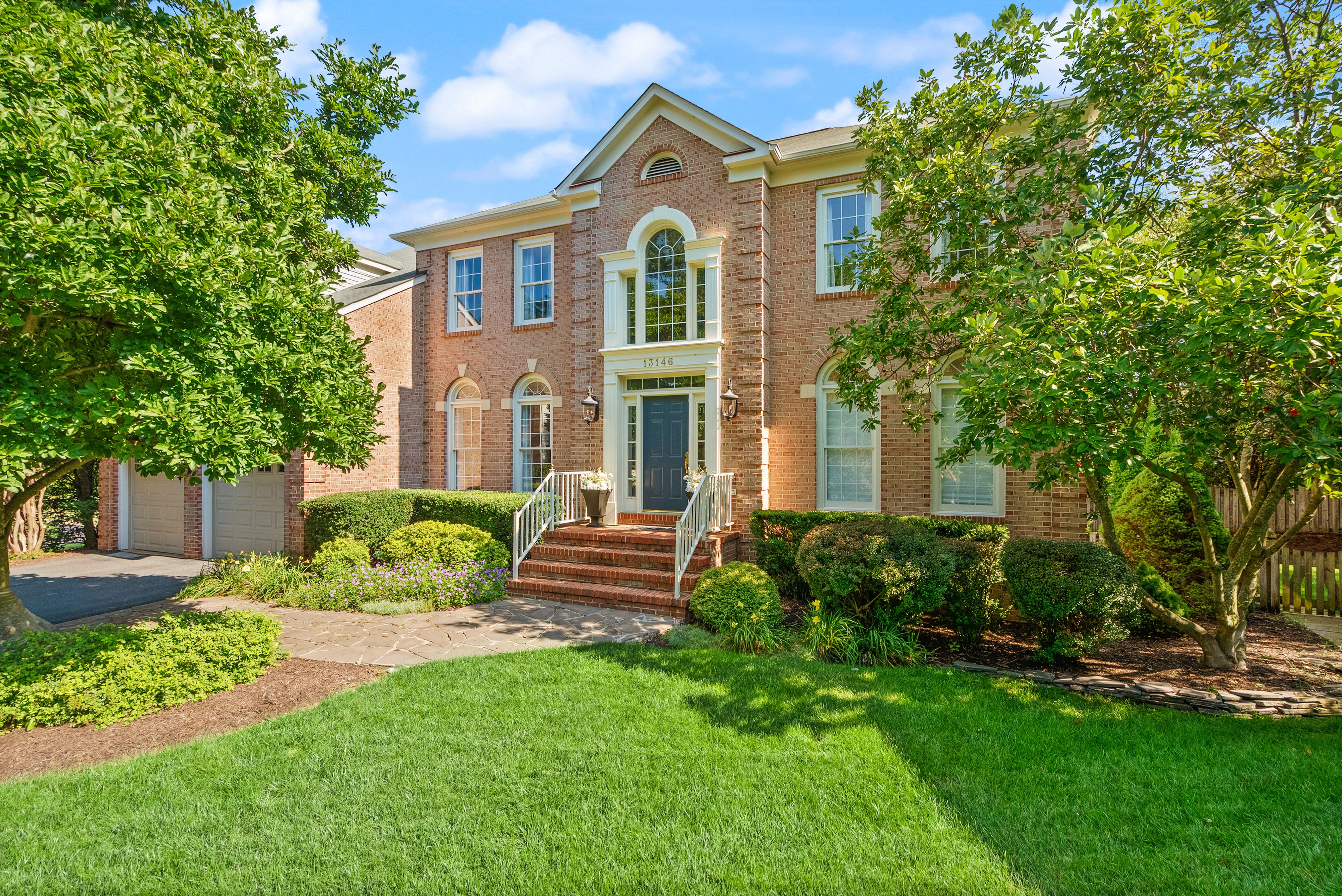
This is the caliber of project — and the caliber of contractor — that Renolution matches homeowners with. When a homeowner submits a kitchen remodel inquiry, they're matched with a specialist who has a documented history of this level of execution. That **specificity is what drives higher close rates** and stronger referral networks.
## Calculating Your Real Contractor Marketing ROI
Let's put this all together in a side-by-side ROI scenario for a mid-size remodeling contractor doing $500K/year in revenue.
### Scenario A: Angi Shared Leads Only
- Monthly lead spend: $2,500
- Leads purchased: ~33 (at $75 avg.)
- Closed jobs at 15%: ~5 jobs
- Average job value: $18,000
- Monthly revenue from leads: $90,000
- **Cost per closed job: $500**
- **Marketing spend as % of revenue: 2.78%**
- Hidden labor cost (sales time): ~$1,300/month
- **True acquisition cost as % of revenue: ~4.2%**
- Referral revenue from non-matching leads: $0
### Scenario B: Renolution Exclusive Pay-on-Close
- Monthly upfront lead spend: $0
- Leads received (exclusive, matched): 8–10
- Closed jobs at 35–40%: ~3–4 jobs
- Average job value: $18,000
- Monthly revenue from leads: $54,000–$72,000
- Commission on close: paid as % of closed revenue
- **Cost per closed job: commission only, no upfront risk**
- Hidden labor cost (sales time): ~$450/month
- Referral revenue (1–2 referred jobs/month): meaningful positive offset
- **Net effective acquisition cost: materially lower after referral revenue**
The volume may be lower in Scenario B, but the efficiency is dramatically higher — and the financial risk profile is night and day. No upfront spend, no chasing ghosts, no competing against four other contractors on every call.
### What This Means for Scaling
The critical insight here is that Angi's model scales your *costs* with your volume. The more leads you buy, the more you spend — regardless of how many you close.
Renolution's model **scales your *revenue* with your performance**. The better you close and the more you refer, the more efficient the entire system becomes.
For contractors looking to grow from $500K to $1M in annual revenue, that distinction is the difference between a marketing budget that compounds your growth and one that just compounds your expenses.
## What to Look For in a Contractor Lead Platform
Not all contractor lead generation platforms are created equal. Here's a quick evaluation framework:
**Exclusivity:** Are leads shared or exclusive? Shared leads fundamentally cap your close rate ceiling regardless of how good you are.
**Payment structure:** Do you pay upfront regardless of outcome, or only on closed jobs? Upfront payment transfers risk to you; pay-on-close aligns incentives.
**Matching quality:** Are leads matched to your specialty and geography, or blasted broadly? Precision matching is the primary driver of close rate improvement.
**Referral opportunity:** Does the platform allow you to earn on leads outside your specialty? If not, you're leaving revenue on the table every month.
**Onboarding speed:** How quickly can you get live and receiving matched projects? The best platforms have contractors active within 24 hours.
Renolution was built by contractors who lived through exactly the frustrations described in this analysis. The platform is designed to solve the structural problems of shared-lead economics — not paper over them with credits and refund policies.
If you're currently spending $2,000 or more per month on shared leads and questioning your ROI, it's worth running your own numbers using the framework above. The data tends to be clarifying.
The journal